
Manager Jiang:13869915758
Manager Zheng:18660933938
The core parameters of PCB electroplating power supply can be divided into six categories, which directly determine the uniformity, density, and production stability of PCB coating, and are the core guarantee of high-density circuit board electroplating process.
🔌 Input and output specification parameters
Input voltage: Typically single-phase 220V or three-phase 380V, with allowable voltage fluctuation of ± 10%, suitable for domestic industrial power grid 50/60Hz standard.
Output voltage: The commonly used range for conventional PCB electroplating is 0-15V, and the customizable range covers 0-2000V. It supports continuous and stepless adjustment from 0-100% of the rated value.
Output current: The standard specifications cover 300A-30000A, and can be customized up to 100000A to meet different sizes of plating tanks and production capacity requirements.
Output power: calculated from the rated output voltage multiplied by the rated output current, and can be flexibly customized according to the load of the production line.
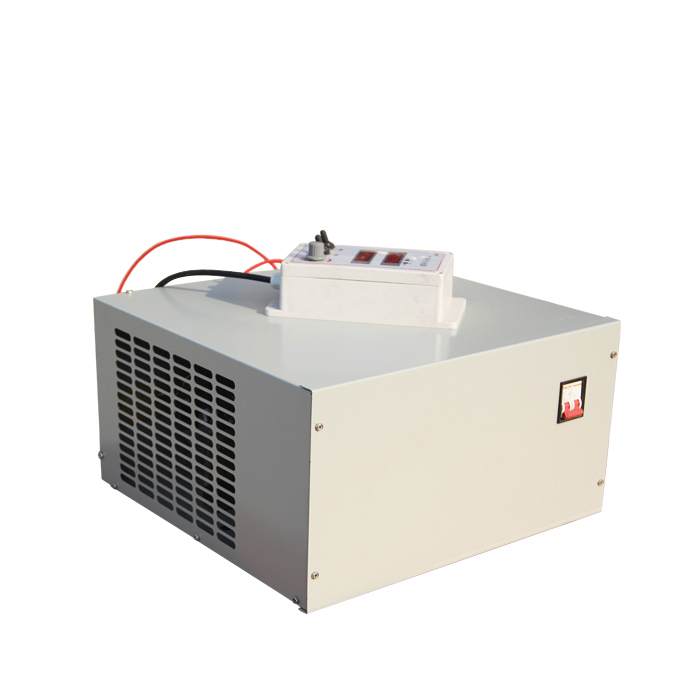
Ceramic PCB board electroplating power supply continuous gold plated terminals thick silver copper precious metal crystal hardware jewelry rectifier
🎯 Control precision and stability parameters
Voltage/current stabilization accuracy: High end models have an accuracy of ≤ 0.1% within the 10% -100% load range, while conventional models control it within ≤± 1% to avoid uneven coating thickness caused by current drift.
Ripple factor: The ripple factor of high-frequency switching power supplies is usually less than 1%. Low ripple output can significantly reduce the porosity of the coating and improve adhesion.
Overall efficiency: Based on high-frequency PWM modulation technology, the overall efficiency is ≥ 90%, saving 15% -35% of electricity compared to traditional thyristor rectifiers.
🌊 Output waveform and process adaptation parameters
Basic output waveform: The mainstream is 30kHz DC square wave, and various waveforms such as square wave, flat wave, sine wave, and single pulse can also be customized to adapt to different plating processes.
Pulse exclusive parameters: The pulse electroplating model can adjust the pulse width (Ton), pulse interval (Toff), peak current density, and duty cycle, and improve the deep plating ability of high aspect ratio PCBs through parameter optimization.
Periodic commutation function: supports customized positive and negative polarity commutation function, reverse pulse can penetrate the passivation film of the coating, refine the grain, and improve the uniformity of the coating.
🛡️ Protection and operational reliability parameters
Full dimensional protection mechanism: comes standard with multiple protections such as output short circuit, overvoltage, overload, over temperature, phase loss, undervoltage, etc., to prevent accidental damage to the power supply and plating workpieces.
Insulation performance: Insulation resistance ≥ 5M Ω, can withstand AC1500V insulation withstand voltage test, suitable for harsh environments such as acid mist and high humidity in electroplating workshops.
Continuous operation capability: Supports long-term uninterrupted operation at full load, with redundant design ensuring 24-hour stable production of the production line.
🧊 Structural and environmental adaptation parameters
Cooling method: Three options are available: air cooling, water cooling, and oil cooling. For high current models, water cooling is preferred for higher heat dissipation efficiency.
Protection level: The standard is IP20/IP21, and the anti salt spray acidification structure design is suitable for the corrosive environment of the electroplating workshop.
Working environment: The standard working temperature range is -15 ℃ to 45 ℃, and the storage temperature is -20 ℃ to 50 ℃, suitable for different workshop working conditions in different regions.
📡 Intelligent control and extended parameters
Adjustment method: Supports intelligent digital adjustment, can be adjusted locally with a knob, and also supports RS485 communication for remote control and parameter programming.
Working mode: Constant voltage/constant current mode can be switched with one click to meet the process control requirements of different electroplating stages.
Programmable function: High end models support multiple working hours and current step programming, automatically completing the entire electroplating process without the need for manual supervision.